Every homeowner knows that a driveway is more than just a place to park—it’s often the first impression visitors get of your property. Yet many of us overlook the subtle warning signs that our asphalt is crying out for professional attention. Ignoring these red flags can turn minor fixes into costly replacements, especially when winter weather accelerates the deterioration process.
The Hidden Cost of Waiting
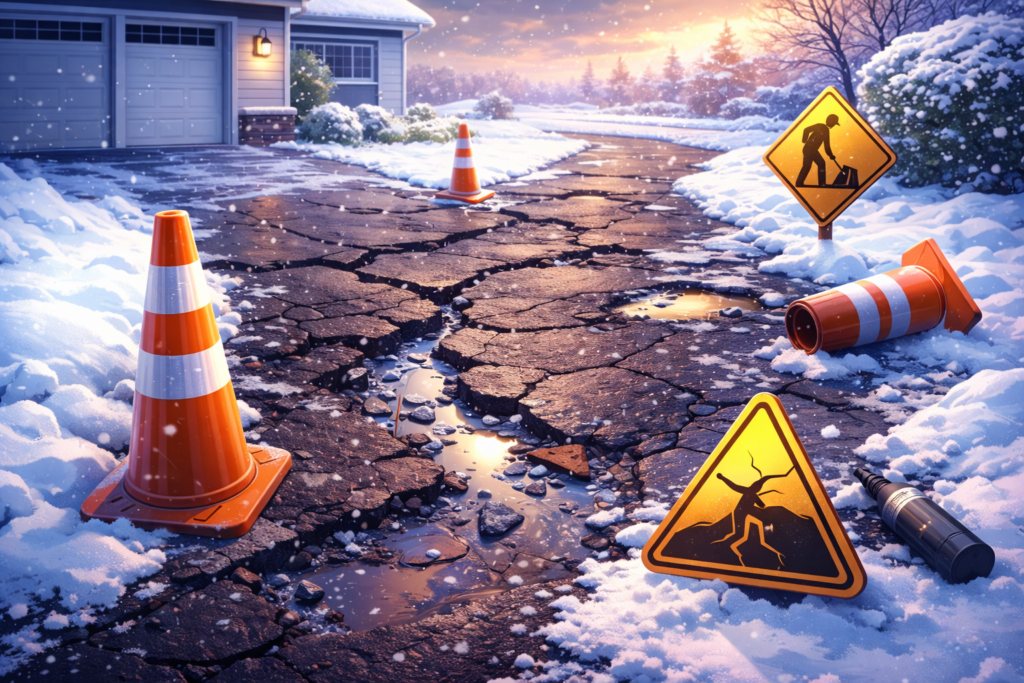
Last fall, my neighbor dismissed the small cracks spreading across his driveway as “cosmetic issues.” By spring, water infiltration during freeze-thaw cycles had transformed those hairline fractures into a web of deep crevices requiring complete resurfacing. What could have been a $800 repair became a $6,000 replacement project.
This scenario plays out in driveways across Southern California more often than you’d think. While we don’t face harsh winters like northern states, temperature fluctuations and seasonal rains still wreak havoc on compromised asphalt.
Sign #1: Spiderweb Cracking (Alligator Cracking)
When you notice interconnected cracks that resemble reptile skin, you’re looking at structural failure beneath the surface. This pattern indicates that the foundation has weakened, often due to poor drainage or a deteriorating base layer. Once alligator cracking appears, simple crack filling won’t suffice—you’ll need professional assessment to determine if patching or full replacement is necessary.
Sign #2: Persistent Pooling Water
After rainfall, does water collect in certain spots on your driveway instead of draining away? These depressions, called birdbaths in the industry, signal that your asphalt has begun settling unevenly. Standing water accelerates deterioration by seeping into the asphalt’s porous structure, weakening it from within. Addressing drainage issues early prevents exponential damage.
Sign #3: Faded and Brittle Surface
Sun exposure oxidizes asphalt, turning it from rich black to dull gray. While color change alone is cosmetic, it indicates that protective oils have evaporated, leaving the surface brittle and vulnerable to cracking. If your driveway feels rough underfoot and small stones come loose easily, the binder holding everything together has degraded significantly.
Sign #4: Edge Crumbling
The perimeter of your driveway bears the brunt of lateral pressure and lacks the support of surrounding asphalt. When edges begin crumbling or breaking away in chunks, it’s not just unsightly—it’s a sign that the entire structure is compromised. This deterioration typically accelerates rapidly once it begins.
Sign #5: Visible Foundation or Base
If you can see gravel, dirt, or the original base material through your asphalt, you’ve moved beyond repair territory into replacement. The asphalt layer has worn through completely in these areas, leaving no barrier against water infiltration and further foundation damage.
Why Professional Assessment Matters
Many homeowners attempt DIY repairs with hardware store crack filler, only to watch their patches fail within months. Professional contractors understand that effective asphalt repair requires addressing the underlying cause, not just the visible symptom. An experienced Asphalt Contractor East Side Capistrano can evaluate whether your driveway needs simple maintenance, strategic repairs, or complete resurfacing.
The Repair vs. Replace Decision
As a general rule, if more than 30% of your driveway shows significant damage, replacement typically proves more cost-effective than patching. However, this calculation depends on factors like the quality of the existing base, drainage conditions, and your long-term plans for the property.
Professional contractors use core sampling and visual inspection to assess base integrity—something impossible to determine from the surface alone. They can also identify whether poor initial installation, inadequate base preparation, or environmental factors caused the damage.
Timing Your Asphalt Project
Southern California’s climate offers year-round asphalt work opportunities, but fall and spring provide ideal conditions. Temperatures between 50-85°F allow asphalt to cure properly without becoming too soft or cooling too quickly. Scheduling repairs before winter rains arrive prevents water from exploiting existing damage during the wettest months.
What to Expect from Quality Work
Reputable asphalt contractors will thoroughly clean and prepare the surface, properly tack coat repair areas, use hot-mix asphalt that matches your existing pavement, and compact new asphalt to the correct density. They’ll also address drainage issues that contributed to the original damage and provide realistic warranties that reflect their confidence in the work.
Protecting Your Investment
Once repairs are complete, regular maintenance extends your driveway’s lifespan significantly. Sealcoating every 2-3 years protects against oxidation and water penetration. Promptly filling small cracks prevents them from expanding. Ensuring proper drainage directs water away from the asphalt surface.
Your driveway represents a substantial investment in your property’s functionality and curb appeal. Those seemingly minor cracks and faded spots are early warnings that shouldn’t be ignored. By addressing asphalt issues while they’re still manageable, you’ll save thousands in future repair costs and maintain the safety and appearance of your property for years to come.